Circle Farms
Plantain (Medicinal, Organic)
Plantain (Medicinal, Organic)
Couldn't load pickup availability
Plantain Seeds – Organic Medicinal Herb Seeds
Grow a versatile traditional herb with Plantain seeds. Plantain is a hardy, low-growing plant valued for its edible leaves and seeds and its long history of use in traditional herbal practices.
This adaptable perennial can be grown in herb gardens, edible landscapes, naturalized areas and mixed medicinal plantings. Once established, plantain is relatively low maintenance and can tolerate a range of growing conditions.
Each packet contains approximately 150+ seeds. These seeds are non-GMO and organically grown. Explore more traditional herbs and useful garden plants in our Medicinal Plant Seeds collection.
Plantain Growing Information
| Growing Detail | Information |
|---|---|
| Common Name | Plantain |
| Plant Family | Plantago genus |
| Seed Count | Approximately 150+ seeds |
| Seed Type | Non-GMO, organically grown |
| Plant Type | Perennial herb |
| Sun Exposure | Full sun to part shade |
| Seed Depth | Surface sow or cover very lightly |
| Germination | Approximately 7–21 days under suitable conditions |
| Plant Spacing | Approximately 8–12 inches |
| Soil | Adaptable; prefers reasonably well-draining soil |
| Edible | Yes; leaves and seeds are edible |
| Best Uses | Herb gardens, medicinal gardens, edible landscapes and naturalized plantings |
What Is Plantain?
Plantain is a hardy herb belonging to the Plantago genus. It should not be confused with the tropical plantain fruit related to bananas.
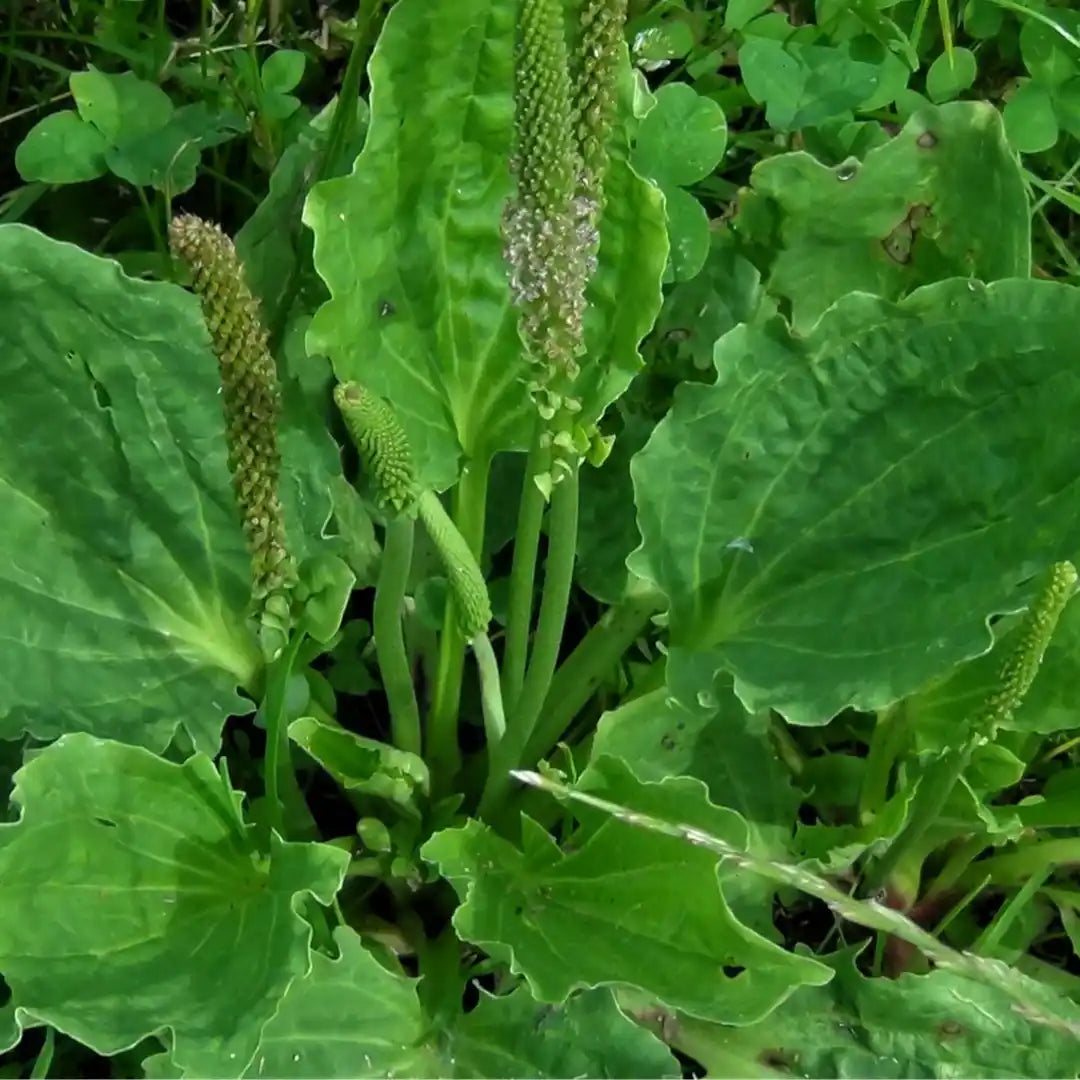
Herbal plantain grows as a low rosette of leaves with upright seed stalks developing as plants mature. Its simple growth habit allows it to fit easily into herb gardens, naturalized spaces and mixed perennial plantings.
Both the leaves and seeds are edible, and plantain has been grown and gathered for centuries as a traditional herbal plant.
How to Grow Plantain From Seed
Plantain is straightforward to grow from seed and can either be started in containers or sown directly into prepared garden soil.
The seeds are small, so sow them near the soil surface and cover them only lightly. Keep the growing medium consistently moist during germination without allowing it to remain waterlogged.
Under suitable conditions, germination generally occurs within approximately 7–21 days.
Once seedlings develop several true leaves, thin or transplant them to provide approximately 8–12 inches of spacing between mature plants.
Starting Plantain Seeds Indoors
Plantain seeds can be started indoors if you want established seedlings ready for transplanting earlier in the growing season.
Fill seed trays or small containers with a fine seed-starting mix. Scatter the seeds across the surface, press them gently into the growing medium and cover only very lightly.
Maintain even moisture and provide bright light after seedlings emerge. Once plants are established and outdoor conditions are suitable, gradually harden them off before transplanting them into the garden.
Direct Sowing Plantain Seeds
Plantain is also well suited to direct sowing.
Prepare the planting area by removing competing weeds and loosening the surface of the soil. Sow the seeds shallowly and gently press them into place.
Keep the seedbed moist while germination occurs. Once seedlings are established, thin crowded areas to improve airflow and give individual plants room to develop.
Does Plantain Need Full Sun?
Plantain is adaptable and can grow in full sun to part shade.
Plants grown in sunny conditions generally develop sturdy growth, while some afternoon shade can be useful in hotter locations where soil dries quickly.
This flexibility makes plantain suitable for many different areas of the garden, including herb beds, border edges and partially shaded edible landscapes.
Soil and Water Requirements
Plantain is not especially demanding about soil and can adapt to many ordinary garden conditions.
For best results, grow it in soil that holds moderate moisture while still draining adequately. Keep young seedlings consistently moist while their root systems establish.
Once mature, plantain is relatively resilient and can tolerate periods of drier conditions. Avoid keeping the soil permanently saturated.
Are Plantain Leaves Edible?
Yes. Plantain leaves are edible.
Young leaves are generally the most tender and can be harvested while plants are actively growing. As leaves mature, their texture becomes tougher and more fibrous.
Plantain can therefore be grown as both a traditional herb and an edible garden plant.
For another familiar plant with edible leaves and a long history of traditional use, explore our Organic Dandelion Seeds.
Are Plantain Seeds Edible?
Yes. The mature seeds produced on plantain's upright seed stalks are also edible.
Allow seed stalks to mature fully before harvesting if seed production is your goal. Because mature plants can produce many seeds, removing unwanted seed stalks can also help limit natural spreading within the garden.
Plantain as a Traditional Medicinal Herb
Plantain has been used as a traditional herbal plant for centuries. Its leaves and seeds have been collected and incorporated into a variety of historical herbal preparations.
Today, many gardeners grow plantain simply because they are interested in traditional herbs, edible plants and useful species with a long history of cultivation and foraging.
Plantain sold as seed should not be treated as a substitute for professional medical care. Anyone considering herbs for a specific health condition should consult an appropriate healthcare professional.
Does Plantain Come Back Every Year?
Plantain is a perennial herb, meaning established plants can return for multiple growing seasons where conditions are suitable.
The plant can also reproduce from seed, allowing new seedlings to appear around mature plants when seed stalks are left in place.
If you want plantain to naturalize, allow selected seed stalks to mature. If you prefer to control its spread, remove seed stalks before mature seeds disperse.
Can Plantain Be Grown in Containers?
Yes. Plantain can be grown in containers, particularly when gardeners want to keep the plant contained or maintain a small dedicated herb garden.
Choose a container with drainage holes and use a loose potting mix. Because containers dry more quickly than garden beds, monitor moisture regularly during warm weather.
Container growing can also make harvesting young leaves easier because plants remain close together and accessible.
Growing a Traditional Herb Garden
Plantain can be combined with other familiar herbs to create a diverse garden of plants traditionally grown for culinary and herbal purposes.
For a flowering companion, consider Roman Chamomile, a compact herb with small daisy-like flowers.
You can also add Feverfew, another traditional garden herb that produces clusters of small white flowers and adds ornamental value to mixed herb beds.
Need More Plantain Seeds?
Gardeners creating larger herb beds or naturalized plantings may need more than a single packet.
Circle Farms also offers Bulk Plantain Seeds in larger quantities for gardeners who want to establish a bigger planting area.
Quick Plantain Planting Instructions
- Sow seeds near the soil surface and cover only lightly.
- Keep the growing medium evenly moist during germination.
- Expect germination in approximately 7–21 days under suitable conditions.
- Provide bright light once seedlings emerge.
- Grow in full sun to part shade.
- Thin or transplant plants to approximately 8–12 inches apart.
- Water regularly while young plants establish.
- Harvest younger leaves when a more tender texture is desired.
- Allow seed stalks to mature if harvesting seeds.
- Remove mature seed stalks if you want to limit self-seeding.
Plantain Seed FAQs
Is this the same plantain as the tropical fruit?
No. Herbal plantain belongs to the Plantago genus and is completely different from the tropical plantain fruit related to bananas.
How many Plantain seeds are in a packet?
Each Circle Farms packet currently contains approximately 150+ seeds.
Are these Plantain seeds organic?
The seeds are described by Circle Farms as non-GMO and organically grown.
Are Plantain leaves edible?
Yes. Plantain leaves are edible, with younger leaves generally having a more tender texture than mature foliage.
Are Plantain seeds edible?
Yes. Mature plantain seeds are also edible and can be harvested from fully developed seed stalks.
Is Plantain a perennial?
Yes. Plantain is a perennial herb and established plants can return for multiple growing seasons where conditions are suitable.
Does Plantain grow in shade?
Plantain can grow in full sun to part shade, making it adaptable to a range of garden locations.
How long do Plantain seeds take to germinate?
Under suitable growing conditions, germination generally occurs within approximately 7–21 days.
Does Plantain self-seed?
Yes. Mature seed stalks can release seed into the surrounding soil, allowing new plants to establish naturally.
Can Plantain grow in containers?
Yes. Plantain grows well in containers with adequate drainage and regular moisture.
Explore More Medicinal and Traditional Herbs
Build a diverse traditional herb garden by exploring our complete Medicinal Plant Seeds collection.
Pair Plantain with Organic Dandelion, grow delicate Roman Chamomile, or add Feverfew for another classic herb-garden plant.
Share