Circle Farms
Chamomile - Roman
Chamomile - Roman
Couldn't load pickup availability
~100+ Seeds
Roman Chamomile Seeds
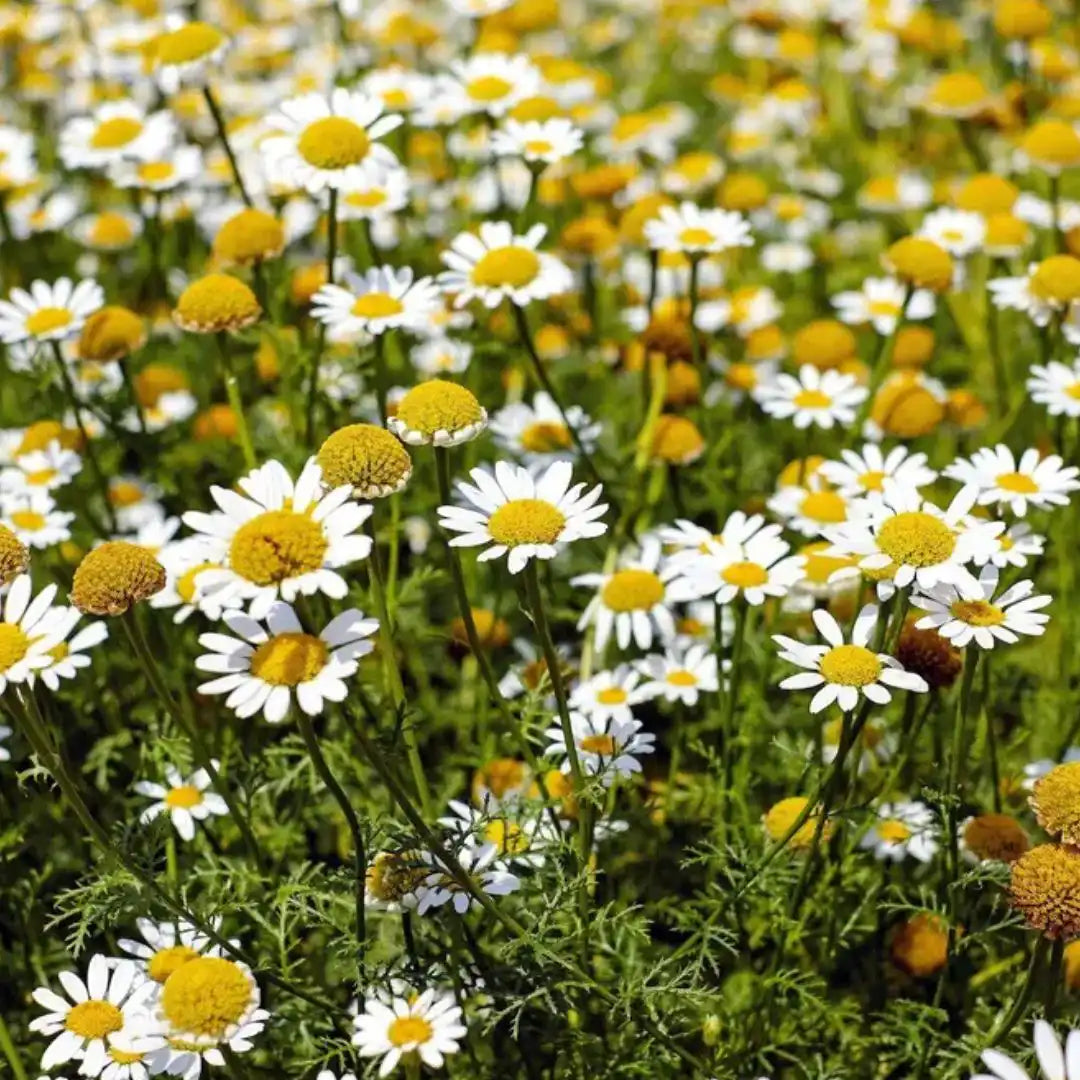
Roman Chamomile is a slow growing perennial herb that forms a fragrant carpet of feathery green foliage topped with cheerful, daisy-like white flowers. Unlike German Chamomile, it does not self seed as much, making it less "weedy".
A charming addition to herb gardens, cottage gardens and pathways, Roman Chamomile (Chamaemelum nobile) stays naturally low and spreading, making it quite different from the taller annual German Chamomile. Its finely divided foliage releases a sweet, apple-like fragrance when brushed or gently crushed, while small white flowers with sunny yellow centres appear throughout summer.
Roman Chamomile is especially useful as an ornamental and culinary herb. The flowers can be harvested and dried for traditional chamomile tea, while the spreading plants work beautifully along pathway edges, between stepping stones or as a fragrant groundcover in areas with light foot traffic. Plants can also be grown in containers or tucked into sunny herb beds.
Once established, Roman Chamomile is relatively drought tolerant and requires little fuss. Regular harvesting or trimming encourages compact, fresh growth, and its flowers are attractive to bees and other beneficial insects. In colder Canadian climates, winter survival can depend on snow cover, drainage and exposure, so it is best grown in a protected location where possible.
Plant Characteristics
• Attracts bees and beneficial pollinators
• Fragrant, apple-scented foliage
• Edible flowers traditionally used for herbal tea
• Low-growing, spreading habit
• Suitable as a fragrant groundcover
• Suitable for containers and pathway edging
• Drought tolerant once established
• Can tolerate light foot traffic
Plant Details
• Scientific Name: Chamaemelum nobile
• Life Cycle: Perennial, generally hardy to Zone 4
• Seed Type: Open Pollinated, Heirloom
• Light Requirements: Full sun to partial shade
• Plant Height: 4–12 in (10–30 cm)
• Seed Depth: Surface sow; press gently into soil without covering
• Spacing: 6–12 in (15–30 cm)
• Bloom Time: Summer
• Days to Maturity: Approximately 90–120 days
• Edible: Yes – flowers are edible and commonly dried for herbal tea
• Germination: Approximately 10–21 days at 18–21°C (65–70°F)
Growing Instructions
Start Roman Chamomile seeds indoors 6–8 weeks before your last spring frost, or direct sow outdoors once temperatures have begun to warm. Because the seeds are very small and require light for germination, scatter them over the surface of moist seed-starting mix and gently press them into place rather than covering them with soil.
Keep the seed bed consistently moist during germination. When seedlings are large enough to handle, transplant outdoors after hardening them off, spacing plants approximately 6–12 in (15–30 cm) apart. Choose a location with full sun to partial shade and well-drained soil. Avoid overly wet locations, particularly where water may collect during winter.
Once established, plants can gradually spread to create a fragrant mat. Trim or harvest regularly if you prefer a tidier, more compact appearance. Flowers can be picked when fully open and used fresh or dried for later use.
FAQ
Q: What is the difference between Roman Chamomile and German Chamomile?
A: Roman Chamomile is a low-growing perennial with a spreading habit, while German Chamomile is a taller, upright annual. Both produce familiar white-and-yellow chamomile flowers and can be used for tea, but Roman Chamomile is particularly well suited to groundcover, edging and fragrant garden plantings.
Q: Can Roman Chamomile be used as a lawn alternative?
A: Yes, with a few caveats. Its low, spreading growth can create a lovely fragrant groundcover and it tolerates occasional light foot traffic. It is not as durable as conventional turf in areas that receive frequent or heavy traffic, so it works best around stepping stones, along pathways or in lightly used garden areas.
Share