Circle Farms
Marigold Seeds - Coco Gold
Marigold Seeds - Coco Gold
Couldn't load pickup availability
Marigold Seeds – Coco Gold
~25 Seeds
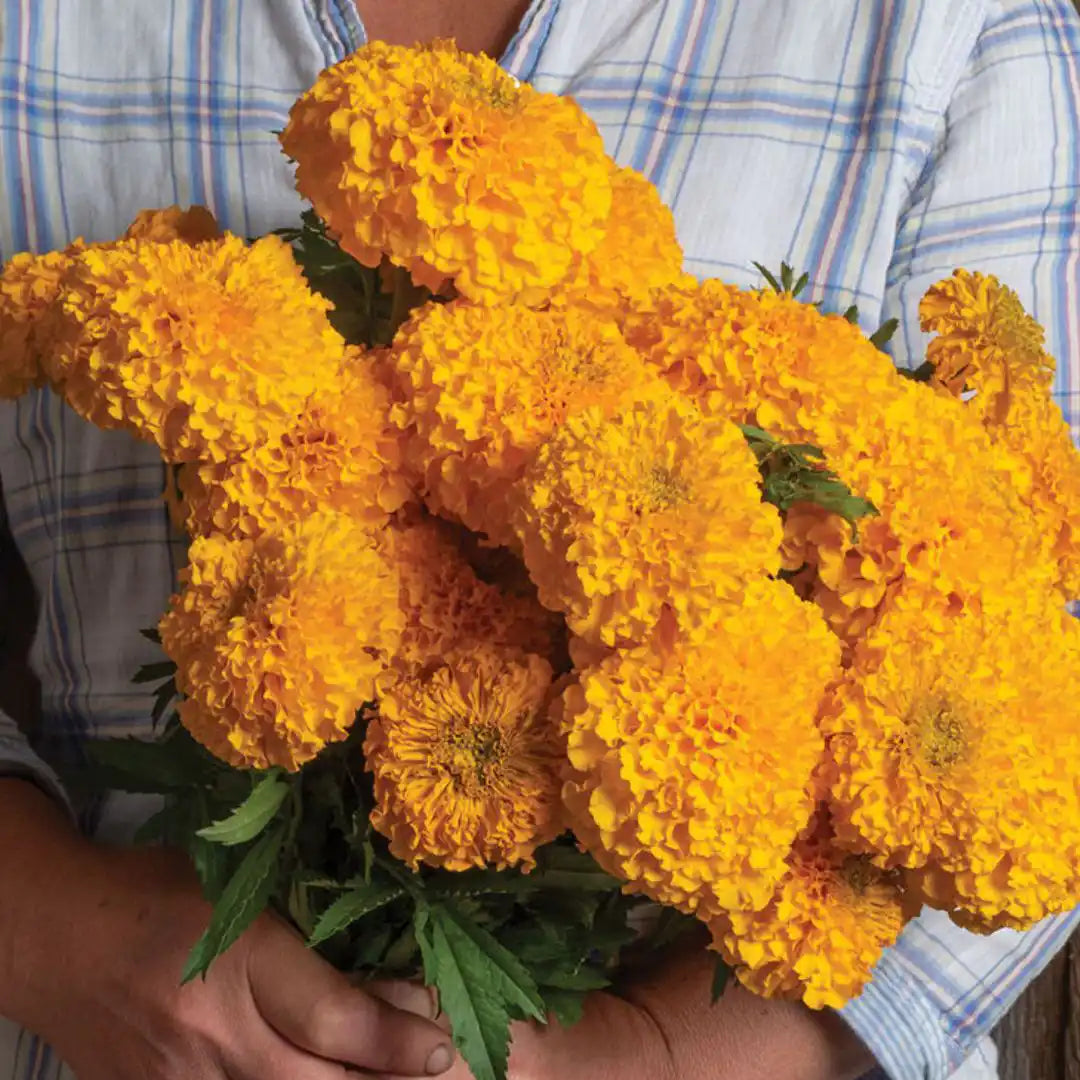
Bright, cheerful, and incredibly easy to grow, Coco Gold marigolds burst with full, double-layered blooms in a rich golden-yellow that absolutely glows in the garden. These large-flowered African-type marigolds produce sturdy, 3–4 inch (7–10 cm) pompom-style blossoms on bushy, well-branched plants — perfect for adding bold summer colour to borders, vegetable beds, and pollinator gardens. Their strong, spicy marigold scent naturally repels pests like aphids and whiteflies, making them excellent companion plants for tomatoes and squash. Coco Gold is heat- and drought-tolerant once established and will bloom all season if kept deadheaded. Long-lasting in fresh bouquets and also fantastic for drying or ceremonial use. A low-maintenance, high-reward garden staple that never disappoints — sunshine on stems.
- Attracts bees and beneficial pollinators
- Suitable for cut flowers (bouquets)
- Deer and rabbit resistant
- Natural pest deterrent (companion planting superstar)
- Drought and heat tolerant once established
Plant Details
- Scientific Name: Tagetes erecta
- Life Cycle: Annual
- Light Requirements: Full sun
- Plant Height: 18–24 in (45–60 cm)
- Seed Depth: 1/4 in (6 mm)
- Spacing: 10–12 in (25–30 cm)
- Bloom Time: Summer to frost
- Days to Maturity: 75–85 days
- Edible / Toxic: Edible petals (culinary/tea), but strong flavour
- Germination: 5–14 days at 21–24 °C (70–75 °F)
Growing Instructions
Direct sow after frost or start indoors 4–6 weeks early for faster blooms. Prefers well-drained soil and full sun. Avoid overfertilizing — too much nitrogen reduces flowers. Deadhead regularly to extend flowering. Heat loving; thrives in summer.
FAQ
Q: How big do the Marigold Seeds – Coco Gold flowers get?
A: Coco Gold produces large 3–4 inch blooms — bigger and bolder than French marigolds.
Q: Are these good for vegetable gardens?
A: Absolutely — they repel pests and are one of the best companion plants for tomatoes, peppers, and cucumbers.
Share