Circle Farms
Globe Thistle - Blue
Globe Thistle - Blue
Impossible de charger la disponibilité du service de retrait
~25 Seeds
Globe Thistle Seeds – Blue Echinops ritro
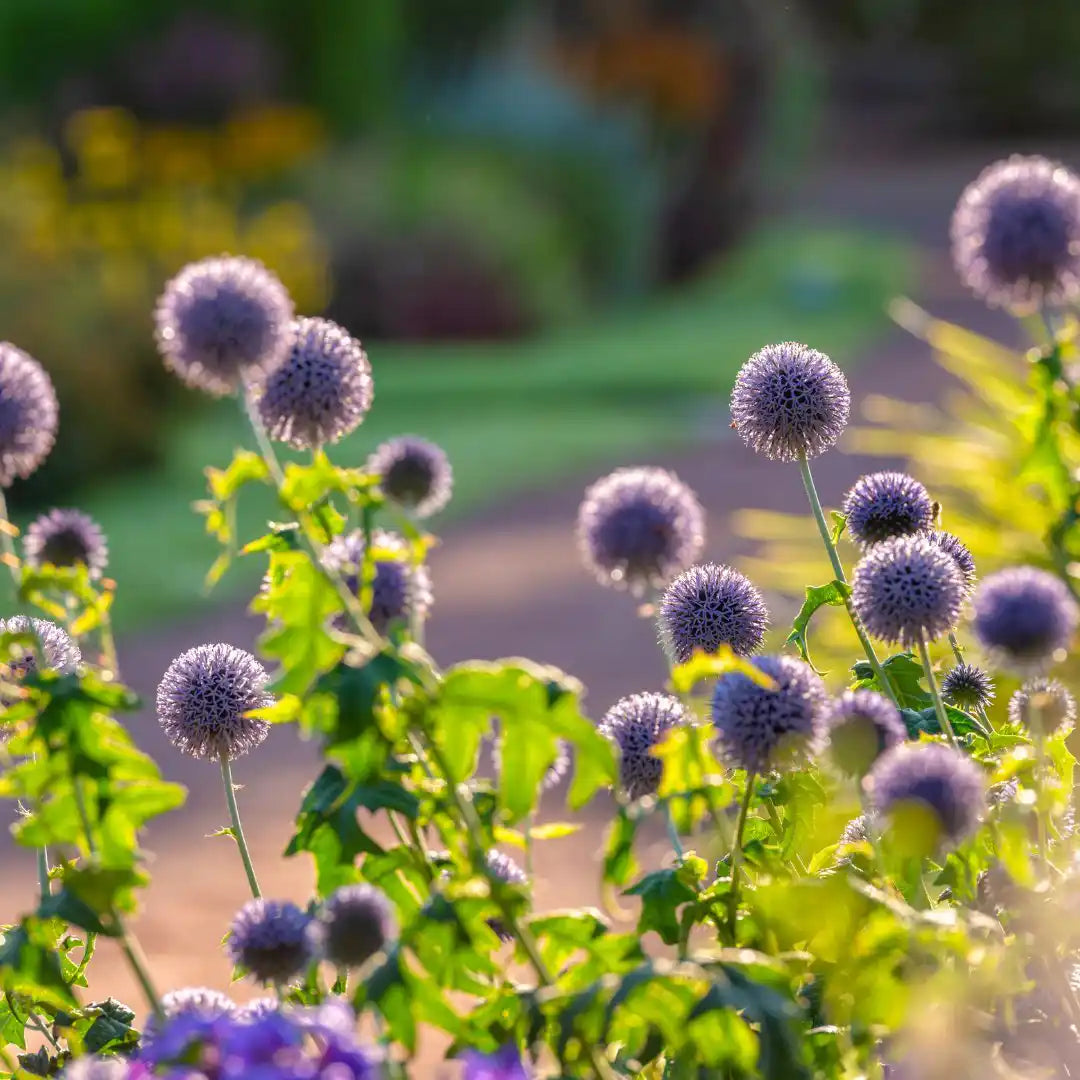
Add architectural shape, metallic-blue colour, and lasting texture to sunny garden beds with globe thistle seeds. Blue Globe Thistle, botanically known as Echinops ritro, is a clump-forming perennial that produces distinctive spherical flower heads above upright, silvery-green stems.
The unusual blue globes create a contemporary appearance in perennial borders while also fitting naturally into cottage gardens, drought-tolerant plantings, pollinator gardens, and cut-flower beds. Bees and butterflies visit the rounded blooms during summer, while the dried seed heads can remain attractive after flowering ends.
Globe thistle is valued for more than its appearance. Once established, it tolerates dry conditions, performs well in lean soil, and is generally avoided by deer. Its strong stems and textured flower heads can be harvested for fresh arrangements or dried for long-lasting indoor displays.
Each packet contains approximately 25 seeds. Explore more long-lived flowers in our Perennial Plant Seeds collection or browse all Flower Seeds.
Globe Thistle Growing Information
| Growing Detail | Information |
|---|---|
| Common Name | Blue Globe Thistle, Small Globe Thistle, or Steel Globe Thistle |
| Botanical Name | Echinops ritro |
| Seed Count | Approximately 25 seeds |
| Plant Type | Herbaceous perennial |
| Flower Colour | Steel blue to violet-blue |
| Flower Form | Round, spiky globe-shaped flower heads |
| Plant Height | Approximately 2–5 feet, depending on conditions |
| Sun Exposure | Full sun; partial shade may be tolerated |
| Soil | Well-draining soil; tolerates sandy, rocky, and relatively lean ground |
| Water Needs | Moderate while establishing; drought tolerant once established |
| Best Uses | Perennial borders, pollinator gardens, cut flowers, dried arrangements, and winter interest |
What Is Globe Thistle?
Globe thistle is a perennial member of the daisy family. Instead of producing a conventional daisy-shaped flower, it forms numerous tiny flowers together in a nearly spherical head. The result resembles a blue ornamental globe or a small botanical sculpture.
The name Echinops refers to the flower head’s hedgehog-like appearance. Each bloom is made up of many narrow structures radiating outward from the centre, creating the distinctive spiky texture.
The foliage is also ornamental. Leaves are grey-green, deeply divided, and somewhat prickly. Their cooler colouring complements the blue flowers and contrasts well with softer foliage and broad-petalled flowers.
Additional botanical information is available from the North Carolina Extension Gardener Plant Toolbox.
Why Grow Blue Globe Thistle?
Globe thistle provides structure at a time when many garden beds are dominated by softer, rounded flowers. Its upright stems and geometric flower heads create contrast without requiring elaborate maintenance.
Gardeners choose globe thistle for:
- Metallic-blue summer flowers
- Strong vertical structure
- Pollinator activity
- Drought tolerance after establishment
- Fresh and dried arrangements
- Decorative seed heads during fall and winter
- Relatively low fertility requirements
- Improved resistance to browsing by deer
Pair it with softer plants from our Yarrow Seeds collection or combine it with other blue-toned flowers from our Blue Flower Seeds collection.
How to Grow Globe Thistle From Seed
Globe thistle can be started indoors or direct sown. Because perennial seeds may germinate less uniformly than fast annual flowers, patience and consistent conditions are important.
For an indoor start, sow seeds approximately 6–8 weeks before the final expected frost. Use clean containers and a moist, well-draining seed-starting mix. Cover the seeds lightly and maintain even moisture without saturating the growing medium.
Some gardeners improve germination by providing a brief period of cool, moist conditions before sowing. Follow the instructions supplied with the seed packet and avoid assuming that every seed requires the same treatment.
Once seedlings emerge, provide strong light and gentle airflow. Allow the upper surface of the mix to begin drying between waterings while preventing the young roots from drying completely.
Direct Sowing Globe Thistle
Seeds can be sown outdoors in prepared soil during spring or fall. Fall sowing allows natural winter temperatures to expose seeds to a cool period before spring germination.
Choose a permanent location carefully because established globe thistle develops a substantial root system and may not appreciate frequent transplanting.
Keep the seedbed marked and relatively weed free. Perennial seedlings may develop more slowly than nearby annual weeds, making them easy to remove accidentally.
Transplanting and Garden Placement
Harden indoor-grown seedlings off gradually before moving them into the garden. Expose them to outdoor conditions over approximately one week, beginning with a sheltered location.
Plant in full sun for the strongest stems and most abundant flowering. Globe thistle tolerates partial shade, but plants may lean or produce fewer flowers when light is limited.
Choose well-draining soil. Rich soil is not essential, and excessively fertile or wet ground can encourage softer growth. Sandy, gravelly, or average garden soil may be suitable when water drains freely.
Watering Globe Thistle
Water young plants consistently during their first growing season. Deep watering encourages roots to move farther into the soil and improves future drought tolerance.
Once established, globe thistle generally tolerates dry periods better than many traditional border flowers. Avoid keeping the crown in permanently wet soil, particularly during winter.
Container-grown plants need more frequent attention because pots dry faster and offer less insulation than garden beds.
Does Globe Thistle Need Fertilizer?
Globe thistle usually performs well without heavy feeding. A modest amount of compost can be added before planting when the soil is extremely poor.
Avoid excessive nitrogen fertilizer. Rich feeding may create tall, soft growth that is more likely to lean and may reduce the plant’s natural compactness.
Does Globe Thistle Spread?
Established plants gradually form clumps. Globe thistle may also self-seed when mature flower heads are left in place.
To reduce volunteer seedlings, remove flower heads before seeds fully mature. To encourage a naturalized display, leave selected heads standing and monitor new seedlings the following spring.
Always prevent ornamental plants from spreading beyond the intended garden area or into nearby natural spaces.
Using Globe Thistle as a Cut Flower
Harvest stems when the spherical flower heads have developed strong blue colour and the small flowers are beginning to open. Cut during a cool part of the day using clean snips.
Remove foliage that would sit below the waterline and place the stems into clean water promptly. Their unusual shape pairs well with softer flowers such as cosmos, asters, yarrow, and zinnias.
Browse additional textural plants in our Filler Flower Seeds collection.
Drying Globe Thistle Flowers
Globe thistle is especially useful for dried arrangements because the flower heads retain their shape. Harvest stems before the flowers become overmature and begin dropping seed.
Tie small bundles and hang them upside down in a dry, dark, well-ventilated location. Keeping them away from direct sunlight can help preserve more of the blue colour.
Quick Globe Thistle Planting Instructions
- Start indoors 6–8 weeks before the final frost or direct sow outdoors.
- Cover seeds lightly and maintain consistent moisture.
- Provide strong light after germination.
- Harden indoor-grown seedlings off gradually.
- Plant in full sun and well-draining soil.
- Water consistently during the first growing season.
- Avoid excessive fertilizer and saturated soil.
- Remove flower heads to limit self-seeding.
- Leave selected heads for winter interest or seed production.
Globe Thistle FAQs
Is globe thistle a perennial?
Yes. Echinops ritro is a herbaceous perennial that can return for multiple seasons when grown in a suitable location.
How tall does globe thistle grow?
Plants commonly reach approximately 2–5 feet, depending on soil, climate, moisture, and competition.
Does globe thistle need full sun?
Full sun produces the strongest growth and most abundant flowering. Partial shade may be tolerated, but stems can become less sturdy.
Does globe thistle attract bees?
Yes. The numerous small flowers within each globe provide accessible feeding points for bees and other visiting insects.
Is globe thistle drought tolerant?
Established plants tolerate dry conditions well. Young plants still require regular watering while their root systems develop.
Can globe thistle be dried?
Yes. The spherical flower heads retain their form and are excellent for dried arrangements.
Explore More Perennial Flowers
Browse the complete Perennial Plant Seeds collection, explore bee-friendly varieties in our Pollinator Plants collection, or shop all Flower Seeds.
Share