Circle Farms
Radish Seeds - French Breakfast
Radish Seeds - French Breakfast
Couldn't load pickup availability
~270 Seeds
Radish Seeds – French Breakfast Heirloom
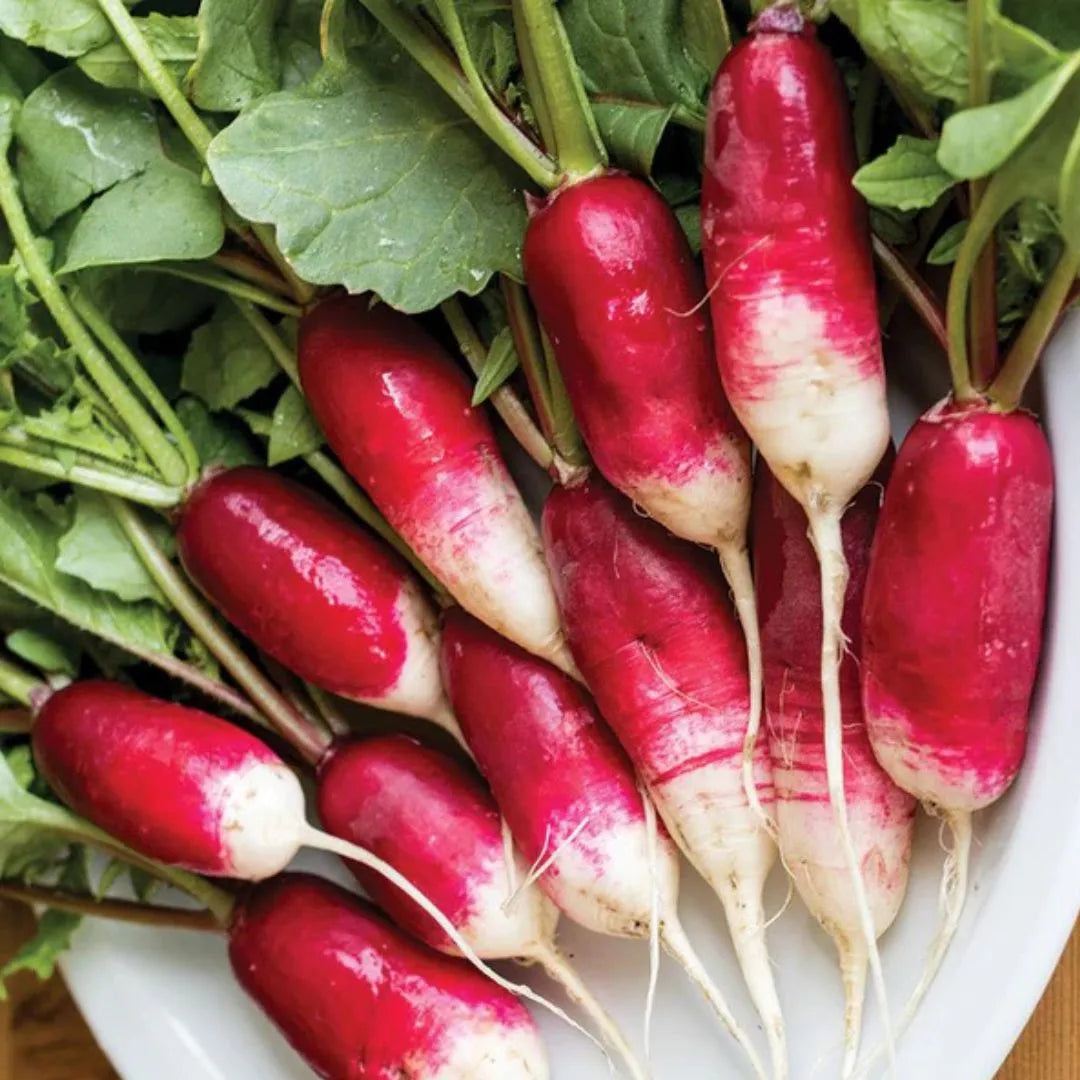
Grow crisp, colourful roots in only a few weeks with French Breakfast radish seeds. This traditional heirloom produces elongated rosy-red radishes with creamy-white tips, tender white flesh, and a mild flavour that is slightly sweet and gently peppery.
French Breakfast is a fast-growing cool-season vegetable suitable for spring and fall gardens across Canada. The roots mature in approximately 25–30 days, making radishes one of the quickest crops gardeners can grow directly from seed.
The narrow, oblong roots are easy to slice and remain tender when harvested promptly. Enjoy them raw with salt or butter, add thin slices to sandwiches and salads, roast or sauté them, or use the edible greens and young seed pods.
Each packet contains approximately 270 open-pollinated heirloom seeds. Browse more underground crops in our Root Vegetable Seeds collection or explore all Vegetable Seeds.
French Breakfast Radish Growing Information
| Growing Detail | Information |
|---|---|
| Variety | French Breakfast Radish |
| Botanical Name | Raphanus sativus |
| Seed Count | Approximately 270 seeds |
| Seed Type | Heirloom and open-pollinated |
| Life Cycle | Cool-season annual vegetable |
| Root Colour | Rosy red with a creamy-white tip |
| Root Shape | Elongated and oblong |
| Flavour | Mild, crisp, slightly sweet, and gently peppery |
| Sun Exposure | Full sun to light partial shade |
| Seed Depth | Approximately ¼–½ inch |
| Initial Spacing | Approximately 1 inch between seeds |
| Germination | Approximately 4–10 days |
| Days to Maturity | Approximately 25–30 days |
| Best Uses | Fresh eating, salads, sandwiches, roasting, sautéing, and garnishes |
Why Grow French Breakfast Radishes?
French Breakfast is one of the most recognizable elongated radishes. It offers the speed of a spring radish with a milder flavour and more distinctive shape than many standard round red types.
This variety is especially useful for:
- Early spring harvests
- Fall vegetable gardens
- Raised beds and containers
- Small urban gardens
- Succession planting
- Marking rows of slow-germinating vegetables
- Beginner and children’s garden projects
University extension resources recognize French Breakfast as a quick-maturing cultivar and note that it can tolerate somewhat warmer conditions than certain early round radishes when supplied with regular water.
See the University of Minnesota Extension radish guide and the University of Illinois Extension growing guide for additional cultivation information.
How to Grow Radish Seeds
Radishes should be direct sown because they grow quickly and do not benefit from transplanting. Prepare loose, well-draining soil and remove stones or hard clumps that may interfere with root development.
Sow seeds approximately ¼–½ inch deep and about 1 inch apart. Keep the soil evenly moist while germination occurs.
Seedlings commonly emerge in 4–10 days. Thin crowded plants promptly so each root has enough room to expand. Removed seedlings can be used as young greens when grown and handled for food.
When to Plant Radish Seeds in Canada
French Breakfast radishes grow best during cool weather. Sow them as soon as the soil can be worked in early spring and continue making smaller plantings until temperatures become consistently warm.
For a fall crop, sow again during late summer. The exact date depends on your first expected fall frost and local temperatures, but the plants need only a short period to mature.
Avoid relying on one large planting. Sow a short row every 7–14 days to spread the harvest and reduce the risk of dozens of roots becoming ready at the same time.
Soil Preparation
Loose soil is essential for smooth, straight French Breakfast radishes. Loosen the planting bed to a depth of at least 6 inches and remove stones, compacted clumps, and undecomposed material.
Radishes prefer well-draining soil that remains consistently moist. A slightly acidic to neutral pH is generally suitable.
Avoid fresh manure and excessive high-nitrogen fertilizer. Too much nitrogen can encourage large leafy tops without proper root development.
Spacing and Thinning Radishes
Overcrowding is one of the most common reasons radishes produce leaves without developing usable roots. Even though the seeds are small, each plant needs its own space.
Sow approximately 1 inch apart and thin seedlings as they grow. Final spacing can be adjusted according to the root size you want, but do not leave plants pressed tightly against one another.
Snip unwanted seedlings at soil level when pulling them would disturb neighbouring roots.
Watering French Breakfast Radishes
Maintain even moisture from germination through harvest. Dry conditions can slow growth and produce stronger flavour, tougher texture, or pithy roots.
Uneven moisture can also cause mature radishes to split. Water deeply enough to moisten the root zone rather than applying frequent surface sprinkles.
Containers require more frequent checking because their limited soil volume dries rapidly in sun and wind.
Growing Radishes in Containers
French Breakfast radishes are well suited to containers because they mature quickly and do not require deep soil compared with large winter radishes.
Choose a pot at least 6 inches deep with drainage holes. Fill it with loose potting mix rather than compacted garden soil.
Sow seeds evenly, thin promptly, and place the container in full sun or light partial shade. During warm weather, moving the pot to a location with afternoon shade can help keep the roots cooler.
Explore additional small-space varieties in our Container Garden Compact Plants collection.
Succession Planting Radish Seeds
Because the roots mature in approximately one month, succession planting is the best way to maintain a steady supply.
Sow a small amount every 7–14 days rather than planting the entire packet at once. Stop sowing when hot weather arrives, then resume during late summer for a fall crop.
Radishes can also mark rows of slower-germinating carrots, beets, or other vegetables. Their seedlings emerge quickly and are harvested before the slower crop needs the space.
When to Harvest French Breakfast Radishes
Begin checking roots approximately 25 days after planting. The upper part of the radish may become visible above the soil, allowing you to judge its width.
Harvest when roots reach a useful size and before they become fibrous, pithy, cracked, or excessively hot. Pull a sample radish rather than leaving the entire row in the ground while waiting for every plant to match.
Remove the tops after harvest to reduce moisture loss from the roots. Wash and refrigerate the radishes promptly.
Eating French Breakfast Radishes
The traditional serving is simple: fresh radishes with butter and salt. Their mild flavour also works in:
- Sandwiches and open-faced toast
- Leafy salads
- Grain bowls
- Tacos
- Pickled vegetable mixtures
- Roasted vegetable dishes
- Lightly sautéed side dishes
The greens are edible when young and healthy. Wash them thoroughly and use them in pesto, soups, sautés, or mixed cooked greens.
Edible Radish Seed Pods
If a plant bolts and produces flowers, it may later form seed pods. Harvest young pods before the seeds inside become hard.
The tender pods have a crisp texture and peppery flavour. They can be eaten raw, added to stir-fries, or lightly sautéed.
Allow selected pods to mature fully only when saving seed. Open-pollinated French Breakfast radishes can produce usable seed, although nearby radish varieties may cross-pollinate.
Common Radish Growing Problems
| Problem | Likely Cause | Recommended Action |
|---|---|---|
| Leaves but no roots | Overcrowding, excessive nitrogen, or compacted soil | Thin seedlings, avoid heavy fertilizer, and loosen the bed |
| Very hot flavour | Heat, drought stress, or delayed harvest | Grow during cool weather and water consistently |
| Pithy or woody roots | Overmaturity or slow growth | Harvest promptly and maintain even moisture |
| Split roots | Uneven watering or roots left in the ground too long | Water consistently and harvest on time |
| Small holes in leaves | Flea beetles | Protect young plants and maintain healthy, rapid growth |
| Plants flower early | Hot weather or other stress | Plant in spring and fall rather than midsummer |
Quick French Breakfast Radish Instructions
- Direct sow as soon as the soil can be worked in spring.
- Sow again in late summer for a fall crop.
- Plant seeds approximately ¼–½ inch deep.
- Space seeds about 1 inch apart.
- Thin seedlings promptly.
- Keep the soil consistently moist.
- Avoid excessive nitrogen fertilizer.
- Make new sowings every 7–14 days.
- Begin checking roots after approximately 25 days.
- Harvest promptly while roots remain crisp and tender.
Radish Seeds FAQs
How long do French Breakfast radishes take to grow?
They generally mature in approximately 25–30 days, depending on temperature, moisture, soil, and spacing.
When should radish seeds be planted?
Sow in early spring as soon as the soil can be worked and again in late summer for a fall harvest.
Do radish seeds need to be started indoors?
No. Direct sow them where they will grow because radishes develop quickly and do not benefit from transplanting.
How deep should radish seeds be planted?
Plant French Breakfast radish seeds approximately ¼–½ inch deep.
Why did my radishes grow leaves but no roots?
Common causes include overcrowding, excessive nitrogen, compacted soil, or weather that is too hot.
Can French Breakfast radishes grow in containers?
Yes. Use a container at least 6 inches deep with drainage holes and loose potting mix.
Can you eat radish greens?
Yes. Healthy young leaves can be cooked or used in pesto, soups, and other dishes.
Are radish seed pods edible?
Young pods are edible before the seeds inside become hard. They have a crisp, peppery flavour.
How often should radishes be watered?
Water often enough to maintain consistent moisture. Avoid allowing the soil to become extremely dry between waterings.
Can I save French Breakfast radish seeds?
Yes. It is an open-pollinated variety, although isolation from other flowering radishes is needed when maintaining the variety accurately.
Explore More Root Vegetables
Compare French Breakfast with Easter Egg Radish, browse our Root Vegetable Seeds collection, or complete your garden with Vegetable Seeds and Heirloom Vegetable Seeds.
Share