Circle Farms
Echinacea Seeds - Pale Purple (Narrow Leaf)
Echinacea Seeds - Pale Purple (Narrow Leaf)
Couldn't load pickup availability
Echinacea Seeds - Pale Purple
~25 Seeds
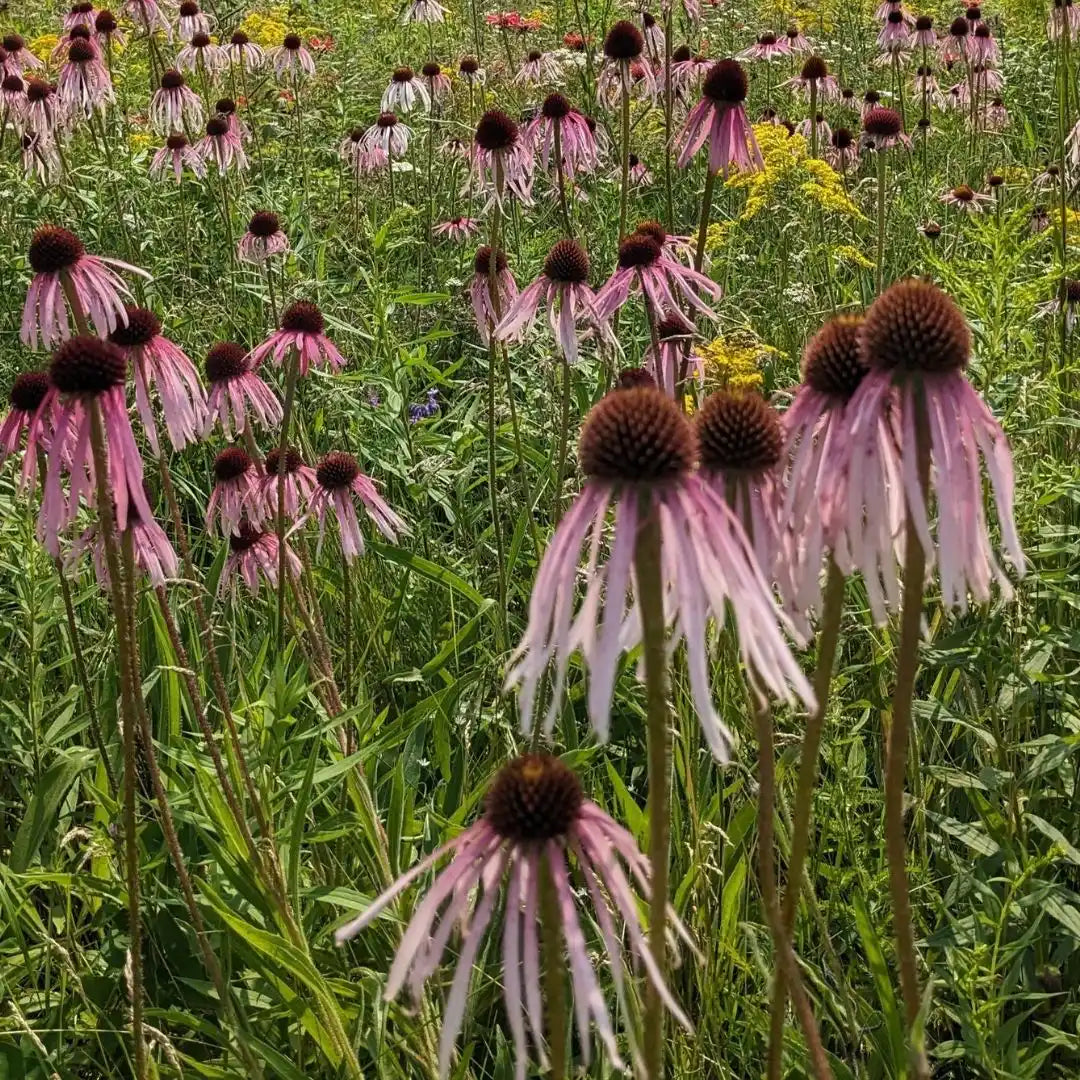
Graceful, long-petaled blooms with a soft lavender glow that pollinators absolutely adore.
Pale Purple Coneflower is a refined, prairie-native perennial known for its narrow, drooping petals and elegant, airy look in the garden. Softer and more delicate than common purple coneflower, Echinacea pallida brings a natural, meadow-like feel to borders, pollinator gardens, and wildflower plantings. The pale purple petals surround a prominent coppery cone, blooming in early to mid-summer and swaying beautifully above fine-textured foliage.
This tough, drought-tolerant perennial thrives in Canadian gardens once established and is a favourite of bees and butterflies. It’s also valued for its traditional medicinal history and works well in naturalized spaces where low maintenance plants are appreciated. Blooms are long-lasting both in the garden and in simple, airy bouquets.
- Attracts bees and butterflies
- Suitable for cut flowers (bouquets)
- Drought tolerant once established
- Deer resistant
- Medicinal properties
- Native prairie perennial
Plant Details
- Scientific Name: Echinacea pallida
- Life Cycle: Perennial (Hardy to Zones 3–8)
- Seed Type: Open Pollinated
- Light Requirements: Full sun
- Plant Height: 24–36 in / 60–90 cm
- Seed Depth: 1/4 in / 6 mm
- Spacing: 12–18 in / 30–45 cm
- Bloom Time: Early to mid-summer
- Days to Maturity: Blooms in second year
- Edible / Toxic: Medicinal properties
- Germination: 10–20 days at 20–22°C
Growing Instructions
Start seeds indoors 8–10 weeks before last frost or direct sow in fall. Seeds may benefit from 2–4 weeks of cold stratification for improved germination. Transplant once hardened off. Prefers well-drained soil and minimal fertilizing.
FAQ
Q: How is Echinacea pallida different from purple coneflower?
A: Pallida has narrower, drooping petals and a more delicate, prairie-style appearance.
Q: Is it low maintenance?
A: Yes. Once established, it’s drought tolerant and very easy to care for.
Share