

Circle Farms
Bean Seeds - Pinto Beans
Bean Seeds - Pinto Beans
Couldn't load pickup availability
Pinto Beans
~50 Seeds
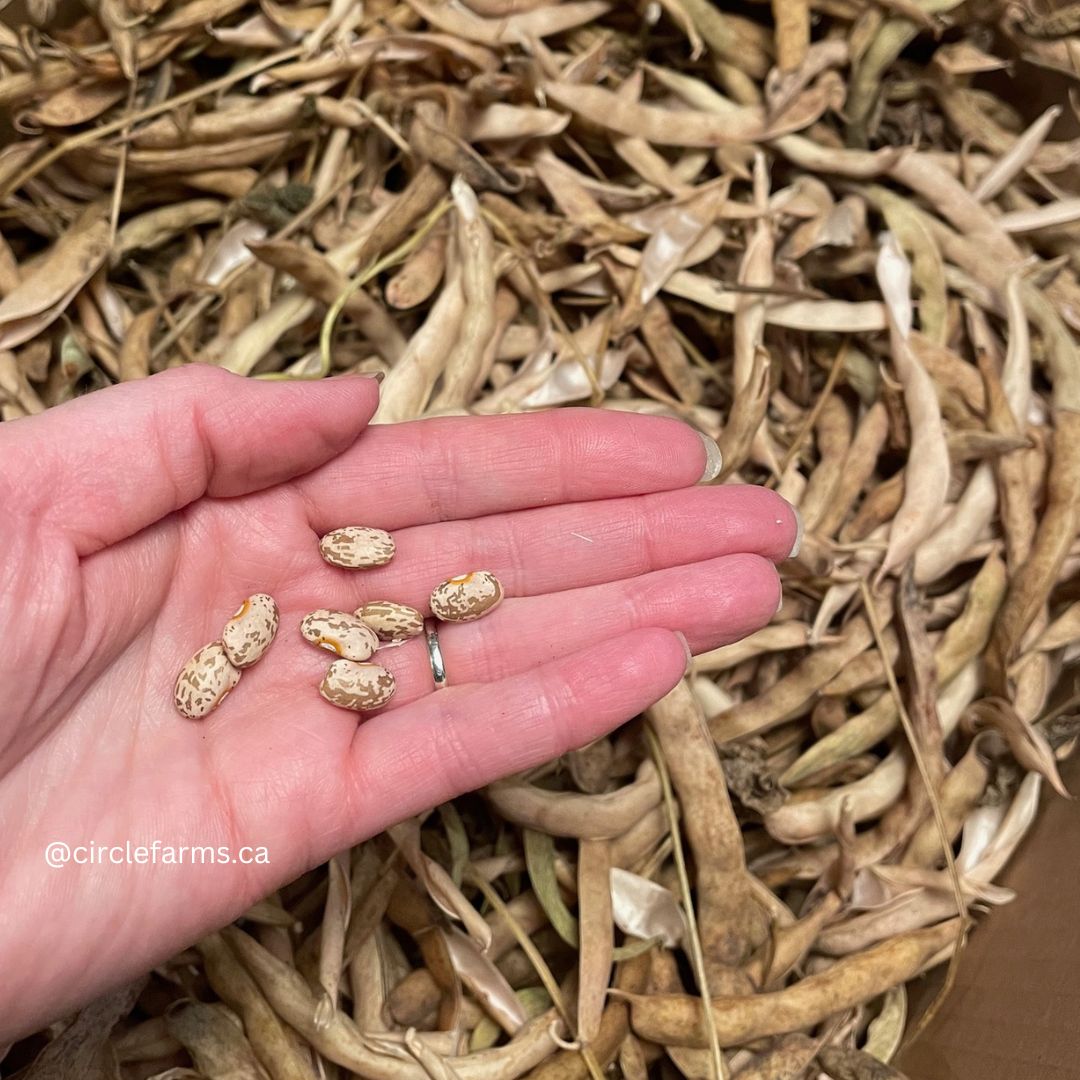
Pinto Beans are a productive, easy-to-grow bush bean grown for their delicious dry beans, perfect for soups, chili, refried beans, and Mexican dishes. These plants produce pods filled with beige beans speckled with brown markings that turn a uniform light brown when cooked. Pinto beans are a great choice for gardeners who want to grow their own dried beans for pantry storage, and they are well suited to Canadian prairie and short-season growing areas.
The plants are compact and do not require trellising, making them ideal for garden beds and larger containers. Beans also help improve garden soil by fixing nitrogen, making them a beneficial crop in garden rotations.
Plant Characteristics
- Grown In Alberta
- Dry beans (no fridge, freezer or canning needed to store)
- Good for storage
- Nitrogen fixing (improves soil)
- Suitable for garden beds and larger containers
- Bush bean
Plant Details
- Scientific Name: Phaseolus vulgaris
- Life Cycle: Annual
- Seed Type: Open Pollinated
- Light Requirements: Full sun
- Plant Height: 45–60 cm (18–24 in)
- Seed Depth: 2.5–4 cm (1–1.5 in)
- Spacing: 10–15 cm (4–6 in)
- Bloom Time: Summer
- Days to Maturity: 90–100 days
- Germination: 7–10 days at 18–24°C
Growing Instructions
Direct sow after last frost when soil has warmed, as beans do not transplant well. Plant seeds 2.5–4 cm (1–1.5 in) deep and space 10–15 cm (4–6 in) apart. Grow in full sun and well-drained soil. Water regularly during flowering and pod development. Allow pods to mature and dry on the plant until they turn brown and dry. Harvest before heavy fall rain or frost and finish drying indoors if needed. Shell beans by stomping on the dried pods to break open the pods. Store in a cool, dry place.
FAQ
Q: Can pinto beans be eaten fresh like green beans?
A: Pinto beans are typically grown as a dry bean, but young pods can be picked early and cooked similarly to snap beans.
Q: How many plants do I need to grow enough dry beans?
A: Dry beans are smaller yielding than snap beans, so planting a longer row or larger patch will give a better harvest for storage and cooking.
Share