Circle Farms
Lettuce Seeds - Mizuna Mustard (Organic)
Lettuce Seeds - Mizuna Mustard (Organic)
Couldn't load pickup availability
300+ Seeds
Organic Mizuna Seeds
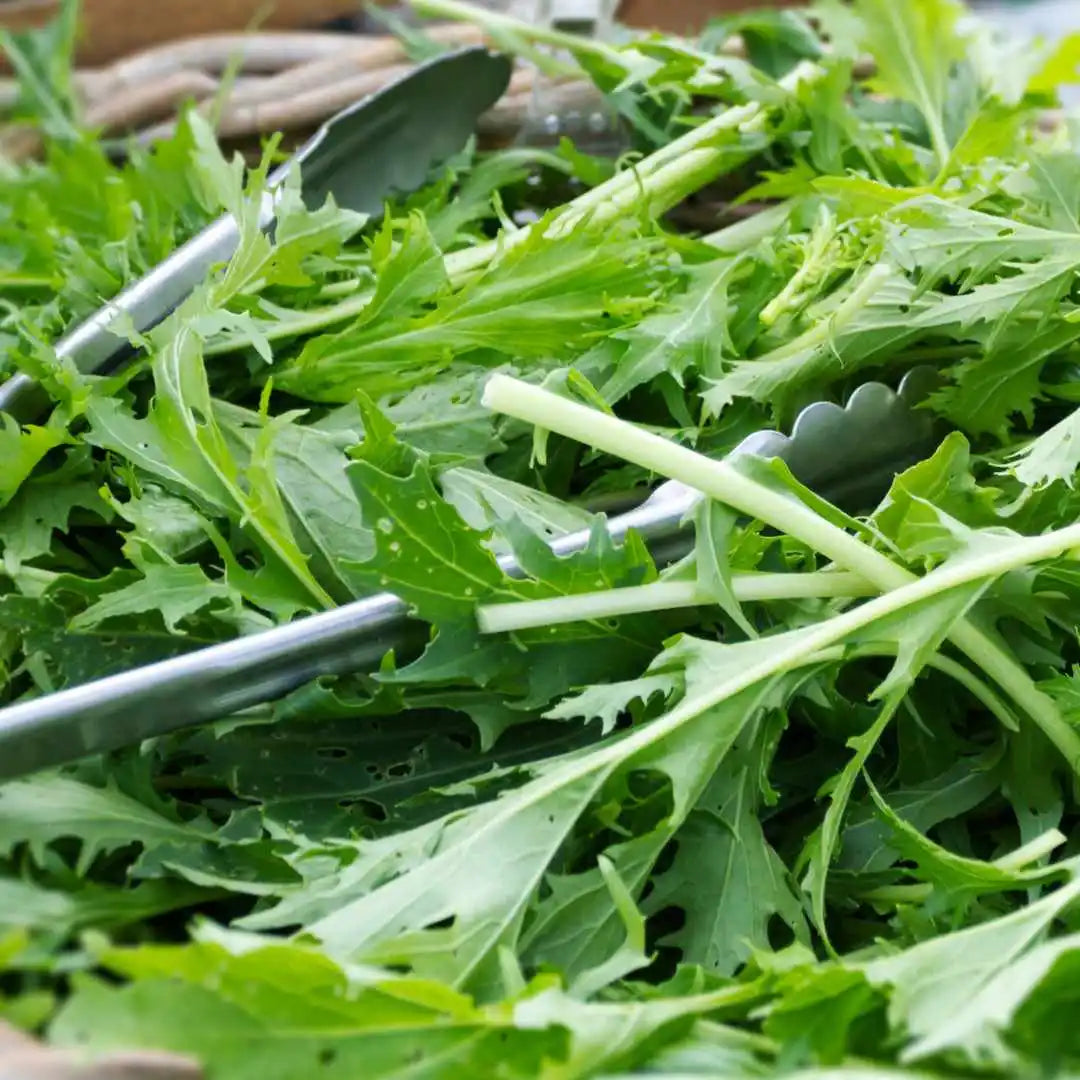
Mizuna (Brassica rapa var. nipposinica) is a fast-growing Japanese leafy green prized for its feathery leaves, mild peppery flavour, and exceptional productivity. Popular in Asian cuisine and increasingly loved by home gardeners across Canada, mizuna delivers multiple harvests from a single planting thanks to its cut-and-come-again growth habit.
Compared to arugula, mizuna offers a gentler peppery flavour, making it an excellent addition to salads, stir-fries, soups, wraps, and fresh garden mixes. It grows quickly in cool weather and remains productive long after many other leafy greens have bolted.
Certified Organic and easy to grow, mizuna is one of the most versatile leafy greens for Canadian gardens.
For more cool-season greens, browse our Lettuce, Spinach & Arugula Seeds Collection.
Scientific Profile
| Feature | Details |
|---|---|
| Common Name | Mizuna |
| Botanical Name | Brassica rapa var. nipposinica |
| Plant Type | Annual leafy vegetable |
| Seed Count | 300+ seeds |
| Days to Maturity | Approximately 45 days |
| Germination Time | 5–10 days |
| Germination Rate | Approximately 70% |
| Seed Depth | ¼ inch (6 mm) |
| Plant Spacing | Thin to 8 inches apart |
| Sun Requirements | Full sun to partial shade |
| Best Season | Spring and fall |
| Growing Style | Cut-and-come-again |
| Certified Organic | Yes – PACS Canada |
Mizuna belongs to the brassica family alongside kale, bok choy, mustard greens, cabbage, and tatsoi. Like many brassicas, it contains vitamins A, C, and K along with beneficial antioxidants and naturally occurring glucosinolates that have been widely studied for their health-promoting properties.
What Does Mizuna Taste Like?
Mizuna has a mild, slightly peppery flavour often described as a cross between arugula and mustard greens, but significantly less spicy than either. The tender leaves provide a pleasant crunch and subtle bite that works well in fresh salads while remaining mild enough for everyday eating.
Young baby leaves are particularly tender and mild, while mature leaves develop a slightly stronger flavour without becoming overpowering.
Why Grow Mizuna?
Mizuna is one of the easiest leafy greens to grow and offers several advantages over traditional lettuce varieties:
- Fast-growing and quick to harvest
- Excellent cold tolerance
- Slow to bolt in warm weather
- Multiple cut-and-come-again harvests
- Suitable for containers and raised beds
- Mild flavour that appeals to most gardeners
- Productive throughout spring and fall
- Excellent companion crop in vegetable gardens
Because of its vigorous growth and reliable production, mizuna is often included in gourmet salad mixes alongside crops such as Bellezia Organic Arugula and Big Leaf Spinach.
Mizuna as a Trap Crop
One unique benefit of mizuna is its usefulness as a trap crop. Many common garden pests, including flea beetles, aphids, and cabbage worms, are highly attracted to mizuna.
Strategically planting mizuna near brassicas such as cabbage, broccoli, kale, and cauliflower can help draw pests away from more valuable crops. This makes mizuna a useful addition to organic vegetable gardens where chemical controls are avoided.
How to Grow Mizuna From Seed
Mizuna is most commonly direct sown outdoors in early spring as soon as the soil can be worked. A second planting in late summer produces excellent fall harvests.
Sow seeds approximately ¼ inch deep in fertile, well-draining soil and keep the seed bed consistently moist during germination.
Most seeds germinate within 5–10 days. Once seedlings develop several true leaves, thin plants to approximately 8 inches apart to encourage strong growth and airflow.
Mizuna grows best in cool temperatures and can tolerate light frosts, making it ideal for Canadian spring and fall gardens.
Starting Mizuna Indoors
For an earlier harvest, start seeds indoors 4–6 weeks before your last expected frost date.
- Use seed-starting trays or small pots.
- Plant seeds ¼ inch deep.
- Keep soil consistently moist.
- Provide bright light after germination.
- Transplant outdoors after the danger of hard frost has passed.
Mizuna transplants readily and typically establishes quickly once moved outdoors.
How to Harvest Mizuna
Mizuna is one of the best cut-and-come-again vegetables you can grow.
Begin harvesting once leaves reach approximately 4–6 inches long. Simply trim the outer leaves while leaving the centre growth point intact.
This encourages continuous regrowth and allows multiple harvests from the same planting over many weeks.
For baby greens, harvest earlier for exceptionally tender leaves. For larger harvests and stir-fry use, allow plants to mature further before cutting.
Mizuna Growing Stages
| Stage | What to Expect |
|---|---|
| Germination | Seeds sprout within 5–10 days |
| Seedling Stage | First true leaves begin forming |
| Baby Greens Stage | Young leaves suitable for salad harvest |
| Rapid Growth Stage | Plants quickly develop dense rosettes |
| Cut-and-Come-Again Stage | Repeated harvests encourage ongoing production |
| Bolting Stage | Flower stalks form in prolonged heat |
Fertilizer for Mizuna
Mizuna benefits from fertile soil rich in organic matter. Incorporating compost before planting typically provides sufficient nutrition for strong leafy growth.
Because mizuna is harvested primarily for its leaves, moderate nitrogen availability helps maximize production throughout the season.
For more detailed guidance, read our Organic Fertilizer Guide.
How to Cook Mizuna
Mizuna is incredibly versatile in the kitchen and can be enjoyed both raw and cooked.
- Fresh garden salads
- Asian-inspired stir-fries
- Soups and broths
- Wraps and sandwiches
- Mixed baby greens
- Grain bowls
- Smoothies and green juices
Its mild flavour makes it easy to incorporate into recipes without overpowering other ingredients.
Quick Planting Instructions
- Sow outdoors in early spring or late summer.
- Plant seeds ¼ inch deep.
- Keep soil consistently moist.
- Thin plants to 8 inches apart.
- Grow in full sun to partial shade.
- Harvest outer leaves regularly.
- Use cut-and-come-again harvesting for continuous production.
- Succession sow every 2–3 weeks for season-long harvests.
FAQs
What is mizuna?
Mizuna is a Japanese mustard green grown for its feathery leaves and mild peppery flavour. It is one of the easiest leafy greens to grow and produces multiple harvests from a single planting.
What does mizuna taste like?
Mizuna has a mild peppery flavour that is gentler than arugula and mustard greens. It offers a pleasant balance of sweetness, crunch, and subtle spice.
Can mizuna grow in containers?
Yes. Mizuna performs exceptionally well in containers, raised beds, and small-space gardens.
How long does mizuna take to grow?
Mizuna typically reaches harvest stage within 45 days, although baby greens can be harvested much sooner.
Is mizuna cold hardy?
Yes. Mizuna tolerates cool temperatures and light frosts, making it an excellent spring and fall crop throughout Canada.
Can I harvest mizuna multiple times?
Absolutely. Mizuna is a classic cut-and-come-again vegetable and often produces multiple harvests from the same planting.
Related Products
Looking to build a productive cool-season salad garden? Pair Organic Mizuna with these popular leafy greens.
Share