Circle Farms
Verbena - Purple Top
Verbena - Purple Top
Impossible de charger la disponibilité du service de retrait
~50 seeds
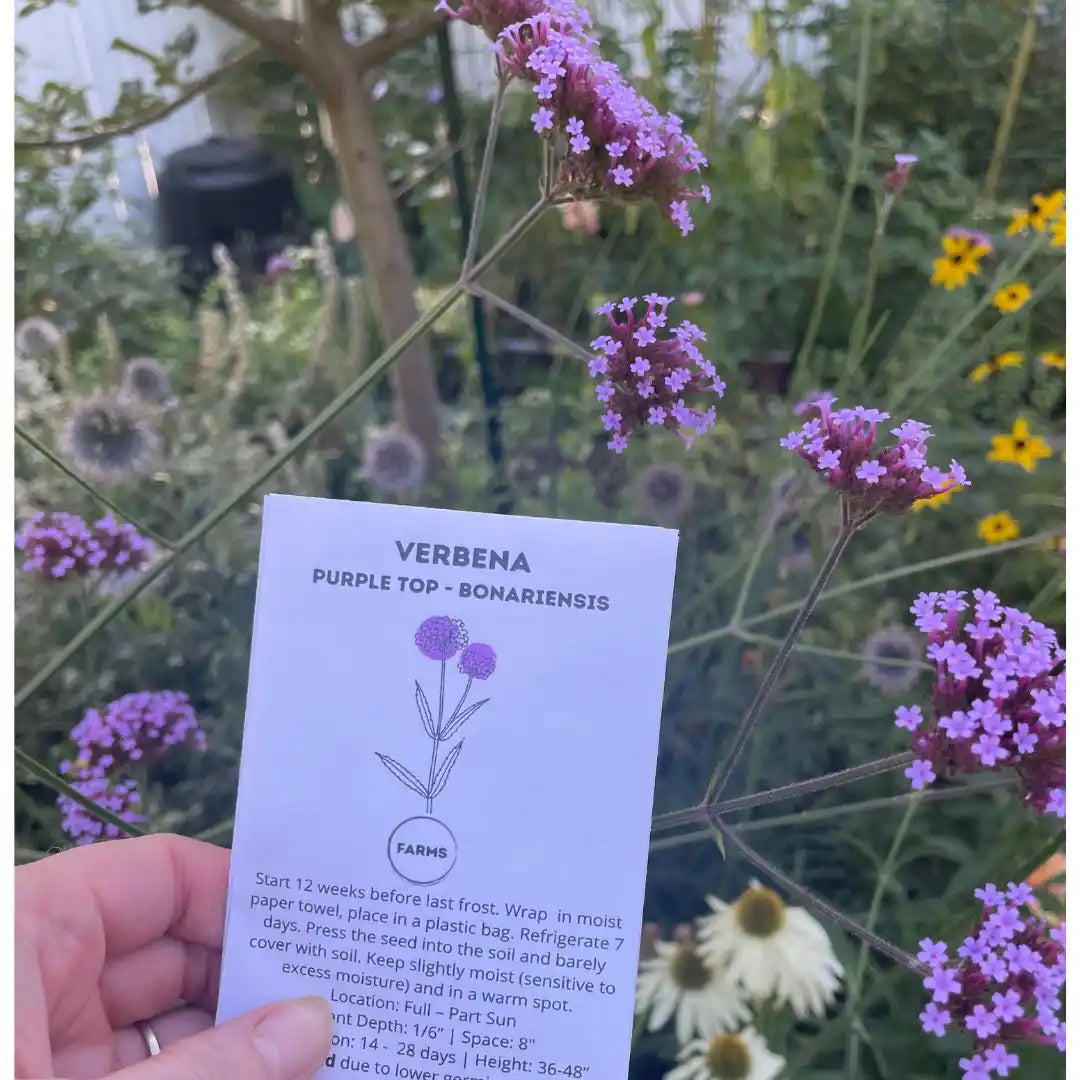
Verbena bonariensis Seeds – Purple Top Verbena
Add airy height, continuous purple colour, and pollinator activity to summer borders with Verbena bonariensis seeds. Also called Purple Top Verbena, Tall Verbena, or Brazilian Vervain, this distinctive plant produces slender branching stems topped with rounded clusters of tiny violet-purple flowers.
The tall stems create a transparent or “see-through” effect. Instead of forming a solid wall of foliage, Verbena bonariensis rises lightly through neighbouring flowers, adding height without hiding the plants behind it.
Flowers appear from midsummer until frost, providing an extended display and a useful nectar source for butterflies, bees, and other visiting insects. The wiry stems are normally strong enough to remain upright without staking.
Each packet contains approximately 50 open-pollinated seeds. Browse more wildlife-friendly varieties in our Pollinator Plants collection or explore all Flower Seeds.
Verbena bonariensis Growing Information
| Growing Detail | Information |
|---|---|
| Common Names | Purple Top Verbena, Tall Verbena, Brazilian Vervain, and Argentinian Vervain |
| Botanical Name | Verbena bonariensis |
| Seed Count | Approximately 50 seeds |
| Seed Type | Open-pollinated |
| Plant Type | Tender perennial, commonly grown as an annual in cooler climates |
| Hardiness | Approximately zones 7–10 |
| Plant Height | Approximately 90–120 cm or 36–48 inches |
| Sun Exposure | Full sun |
| Bloom Time | Mid-summer through frost |
| Germination | Approximately 14–28 days |
| Seed Depth | Surface sow or barely cover |
| Best Uses | Pollinator gardens, mixed borders, naturalistic plantings, and cut flowers |
What Is Verbena bonariensis?
Verbena bonariensis is a tall flowering species native to South America. It produces most of its foliage near the lower part of the plant, while long, narrow stems carry purple flower clusters above neighbouring plants.
The flower clusters appear dense from a distance but are formed from many small tubular blossoms. Butterflies can land on the rounded heads while feeding, and bees can move among the individual flowers.
University extension profiles describe it as a tender perennial in warm climates and an annual in cooler regions. More botanical information is available from the North Carolina Extension Gardener Plant Toolbox and University of Wisconsin Extension.
Why Grow Purple Top Verbena?
Purple Top Verbena solves a common garden-design problem: adding height without creating visual heaviness. Its narrow stems allow viewers to see shorter flowers through and around the plant.
It works especially well with:
- Cosmos
- Zinnias
- Asters
- Ornamental grasses
- Sunflowers
- Rudbeckia
- Echinacea
- Yarrow
- Low-growing annual flowers
Pair it with varieties from our Cosmos Seeds collection or create a layered wildlife planting using our Echinacea Seeds.
How to Grow Verbena bonariensis From Seed
Start seeds indoors approximately 10–12 weeks before the final expected frost. Germination can be irregular, so allow more time than you would for fast annual flowers.
Cold stratification can improve results. Place seeds in a lightly moist medium or paper towel inside a sealed bag and refrigerate them for approximately seven days before sowing.
After stratification:
- Fill clean trays with moist seed-starting mix.
- Press seeds gently onto the surface.
- Cover them only very lightly.
- Maintain slight, consistent moisture.
- Avoid keeping the mix waterlogged.
- Allow approximately 14–28 days for germination.
Provide warmth during the day, but avoid continuously overheating the growing mix. Once seedlings emerge, place them under strong light.
Transplanting Purple Top Verbena
Harden indoor-grown seedlings off gradually before transplanting. Begin with short periods in a sheltered location and slowly increase their exposure to sunlight, wind, and outdoor temperatures.
Plant after the danger of damaging frost has passed. Choose a sunny location with soil that drains well.
Young transplants may temporarily wilt after root disturbance. Keep them watered while they re-establish, but do not leave their roots in saturated soil.
Sunlight, Soil, and Water
Verbena bonariensis performs best in full sun. Plants grown in shade may lean, stretch, and produce fewer flowers.
Average garden soil is usually sufficient as long as it drains well. Extremely rich ground may produce excessive height and softer growth.
Water regularly during establishment. Once the roots are well developed, the plants tolerate dry periods better than many moisture-loving annuals.
Does Verbena bonariensis Need Staking?
The stems are tall but naturally wiry and self-supporting. Staking is usually unnecessary in sheltered or moderately exposed gardens.
Support may be helpful when plants grow in very rich soil, receive limited sunlight, or are exposed to severe wind. In these conditions, discreet stakes or horizontal netting can prevent leaning.
Is Verbena bonariensis a Perennial?
It is a tender perennial in warmer growing zones but is usually treated as an annual across colder parts of Canada. Winter survival depends on minimum temperatures, soil drainage, snow cover, and local microclimate.
Even when the original plant does not survive, self-sown seedlings may appear the following year. These volunteers can make Purple Top Verbena seem perennial.
Does Verbena bonariensis Self-Seed?
Yes, the plant may produce volunteer seedlings when flower heads are allowed to mature. In favourable conditions it can spread beyond its intended location.
Deadhead flowers before seed matures when you want to limit spreading. Remove unwanted seedlings promptly and never allow the plant to escape into nearby natural areas.
Verbena bonariensis for Pollinators
The extended flowering season makes Purple Top Verbena valuable in mixed pollinator plantings. It can continue producing nectar-bearing flowers after some early summer plants have finished.
For a more resilient habitat, combine it with different flower shapes and bloom periods. Browse additional options in our Pollinator Plants collection.
Using Purple Top Verbena as a Cut Flower
Cut stems when most of the tiny flowers within a cluster have opened. Harvest during a cool part of the day and place stems into clean water promptly.
The airy flower heads add height and movement to arrangements without overwhelming larger focal flowers. They work especially well with zinnias, cosmos, asters, and sunflowers.
Quick Verbena bonariensis Instructions
- Cold stratify seeds for approximately seven days.
- Start indoors around 10–12 weeks before the final frost.
- Surface sow or barely cover the seeds.
- Keep the mix slightly moist but not saturated.
- Allow approximately 14–28 days for germination.
- Provide strong light after emergence.
- Harden seedlings off before transplanting.
- Plant in full sun and well-draining soil.
- Water consistently while plants establish.
- Deadhead to reduce unwanted self-seeding.
Verbena bonariensis FAQs
Is Verbena bonariensis annual or perennial?
It is a tender perennial in approximately zones 7–10 but is commonly grown as an annual in colder Canadian climates.
How tall does Verbena bonariensis grow?
Plants generally reach approximately 90–120 cm or 36–48 inches, although conditions can influence final height.
Does Verbena bonariensis need cold stratification?
A short cold, moist period can improve germination by helping to overcome seed dormancy.
How long does germination take?
Germination generally takes approximately 14–28 days and may occur unevenly.
Does Purple Top Verbena attract butterflies?
Yes. Its elevated clusters of small purple flowers are highly attractive to butterflies and other pollinators.
Does it need staking?
Usually not. The stems are wiry and self-supporting, although exposed or heavily fertilized plants may benefit from support.
Can it grow in containers?
Yes, provided the container is large, drains well, and receives full sun. Its height makes a substantial, stable pot important.
Explore More Pollinator Flowers
Browse our complete Pollinator Plants collection, explore more purple blooms in the Blue Flower Seeds collection, or shop all Flower Seeds.
Share