Circle Farms
Cress - Persian
Cress - Persian
Impossible de charger la disponibilité du service de retrait
100 Seeds
Persian Cress Seeds – Organic Bouquet Filler
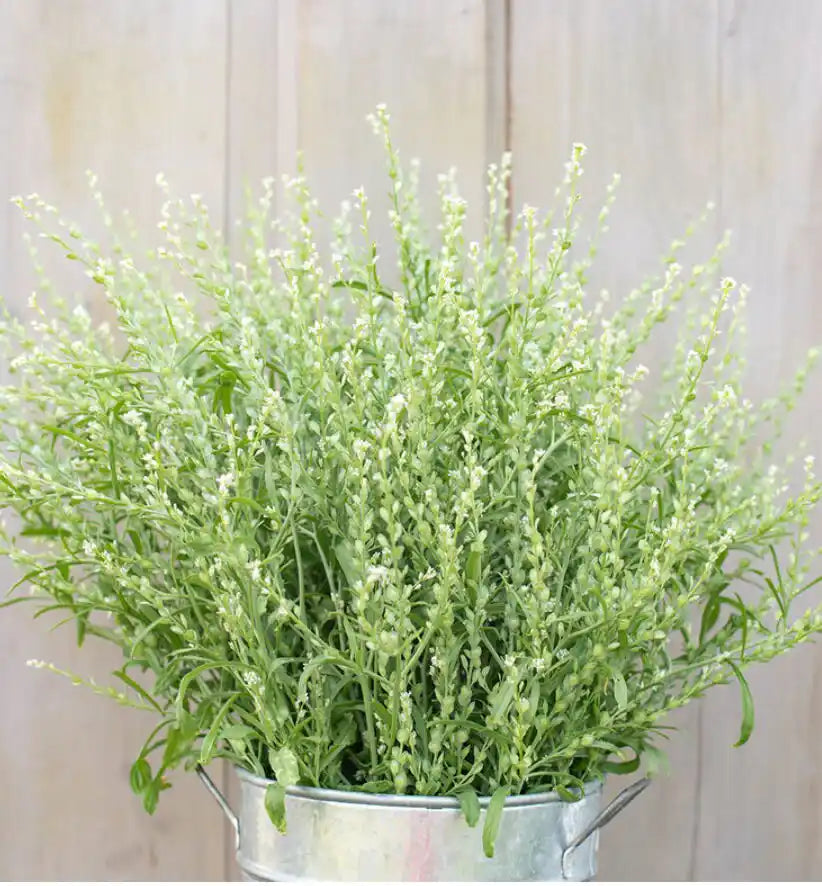
Add delicate texture and silvery-green seed pods to fresh arrangements with Persian cress seeds. Persian cress, botanically known as Lepidium sativum, is a fast-growing annual valued by flower growers for its slender stems and small rounded pods that resemble miniature green coins.
As the plants mature, their airy stems create an attractive filler for bouquets and floral designs. Persian cress can soften the space between larger focal flowers while adding movement, height, and subtle green texture.
The young leaves are also edible and have a mild peppery flavour. Gardeners can therefore grow Persian cress as both an ornamental bouquet filler and a distinctive edible herb.
Each packet contains approximately 100 USDA Certified Organic seeds. Browse additional textural varieties in our Filler Flower Seeds collection or explore all Herb Seeds.
Persian Cress Growing Information
| Growing Detail | Information |
|---|---|
| Common Name | Persian cress or garden cress |
| Botanical Name | Lepidium sativum |
| Seed Count | Approximately 100 seeds |
| Seed Type | USDA Certified Organic |
| Plant Type | Fast-growing annual herb and bouquet filler |
| Seed Depth | Approximately ¼ inch |
| Plant Spacing | Approximately 2–6 inches |
| Plant Height | Approximately 36–40 inches at maturity |
| Days to Maturity | Approximately 65–75 days for mature stems and pods |
| Planting Method | Direct sowing recommended |
| Succession Planting | Sow additional batches approximately two weeks apart |
| Best Uses | Bouquet filler, floral design, edible young leaves, and herb gardens |
What Is Persian Cress?
Persian cress is a cultivated form of garden cress grown for edible leaves and decorative seed-bearing stems. It belongs to the cabbage family, which also includes mustard, kale, broccoli, and other plants known for peppery or mustard-like flavours.
When harvested young, the leaves can be added to salads, sandwiches, wraps, and garnishes. When the plants are allowed to mature, they develop taller branching stems covered with small, rounded seed pods.
These pods give Persian cress its value in cutting gardens. Their neutral silvery-green colour pairs easily with bright flowers, soft pastels, white blooms, dried materials, and foliage.
Persian Cress as a Bouquet Filler
Filler flowers and foliage connect larger blooms within an arrangement. They occupy open spaces, add texture, and create a more natural transition between focal flowers.
Persian cress offers a different effect from traditional flowering fillers. Instead of producing a cloud of small colourful flowers, it contributes branching green stems and rounded pods. This makes it useful in modern, garden-style, neutral, and textural arrangements.
Persian cress can be combined with:
- Zinnias
- Cosmos
- Sunflowers
- Sweet peas
- Snapdragons
- Dahlias
- Strawflowers
- Ammi and Queen Anne’s lace forms
- Herbs such as bouquet dill
Explore more options for arrangements in our Filler Flower Seeds collection and our Green Flower Seeds collection.
How to Grow Persian Cress From Seed
Direct sowing is the recommended method. Plant Persian cress as soon as the soil can be worked in spring. Prepare a loose, weed-free seedbed in a sunny or lightly shaded location.
Sow the seeds approximately ¼ inch deep and keep the soil consistently moist during germination. Once seedlings develop their first true leaves, thin them to approximately 2–6 inches apart.
Closer spacing can produce finer stems, while wider spacing allows plants to branch more fully. The ideal spacing depends on whether you are growing primarily for young leaves or mature bouquet stems.
Starting Persian Cress in Containers
Seeds can also be started in cell packs or larger containers approximately 4–6 weeks before transplanting. Provide strong light after germination so the seedlings remain compact.
Harden indoor-grown plants off before transplanting them outdoors. Introduce them gradually to sunlight, wind, and outdoor temperatures over approximately one week.
Because mature Persian cress can reach 36–40 inches, plants started in containers should be transplanted before their roots become crowded.
Sunlight, Soil, and Water
Grow Persian cress in full sun for strong stems and vigorous mature growth. Light shade may be tolerated, especially when plants are grown mainly for tender leaves during warmer weather.
The soil should be fertile, loose, and well draining. Work compost into poor soil before planting, but avoid excessive nitrogen that may encourage weak, overly lush growth.
Maintain even moisture while plants germinate and establish. Once mature, water deeply when the upper soil begins to dry. Avoid keeping the roots in saturated ground.
For general guidance on growing herbs and vegetables in containers, consult the University of Maryland Extension container-growing guide.
Succession Planting Persian Cress
Persian cress reaches the mature pod stage in approximately 65–75 days. A single planting may produce many usable stems at once, so succession sowing is helpful when a longer harvesting window is desired.
Sow additional batches approximately two weeks apart. Each planting will mature at a slightly different time, helping maintain a supply of fresh greenery for arrangements.
Stop making later sowings when there is not enough frost-free time remaining for the plants to reach the desired harvest stage.
Does Persian Cress Need Support?
Mature plants may require support, particularly in windy or exposed gardens. Closely spaced plants can help support one another, but airflow should still be maintained.
Flower netting, narrow stakes, or a low horizontal support grid can keep the stems upright. Install support before the plants become tall and difficult to handle.
Avoid tying stems too tightly. Leave room for the plant to expand and move naturally.
Harvesting Persian Cress for Bouquets
Harvest stems when the small seed pods are well formed and have developed their characteristic silvery-green appearance. Cut during a cool part of the day using clean, sharp snips.
Remove lower leaves that would sit below the waterline and place the stems into clean water promptly. Allow them to hydrate in a cool location before arranging.
For the longest usable stems, cut near the base while leaving enough plant material for any remaining side branches to develop.
Persian cress can be used fresh or experimented with as a dried textural material. Harvest for drying before the stems become brittle or the pods begin releasing mature seeds.
Harvesting Persian Cress for Eating
For culinary use, harvest the leaves while they are young and tender. The flavour is mild and peppery, similar to other forms of garden cress.
Add clean leaves to:
- Salads
- Sandwiches
- Wraps
- Soups as a fresh garnish
- Egg dishes
- Herb mixtures
Older leaves may develop a stronger flavour and firmer texture. Grow separate successions when you want both tender edible leaves and fully mature bouquet stems.
Quick Persian Cress Planting Instructions
- Direct sow as soon as the soil can be worked.
- Sow seeds approximately ¼ inch deep.
- Keep the soil evenly moist during germination.
- Thin seedlings to approximately 2–6 inches apart.
- Provide full sun for strong mature stems.
- Add support in windy or exposed locations.
- Sow additional batches every two weeks for continuous harvests.
- Harvest young leaves for their peppery flavour.
- Harvest mature stems when the silvery-green pods are well formed.
Persian Cress FAQs
Is Persian cress edible?
Yes. The young leaves are edible and have a mild peppery flavour. Mature seed-bearing stems are primarily grown as bouquet filler.
Is Persian cress the same as garden cress?
Persian cress belongs to the species Lepidium sativum, commonly called garden cress. This selection is particularly useful for its decorative mature seed pods.
How tall does Persian cress grow?
Plants can reach approximately 36–40 inches when grown to maturity for cut-flower stems.
How long does Persian cress take to mature?
Mature bouquet stems and pods generally develop in approximately 65–75 days under suitable conditions.
Can Persian cress be direct sown?
Yes. Direct sowing is recommended and can begin as soon as the soil can be worked in spring.
How often should Persian cress be succession planted?
Additional batches can be sown approximately every two weeks to spread the harvest over a longer period.
Does Persian cress need support?
Support may be beneficial because mature plants are relatively tall. Windy locations are more likely to require stakes or flower netting.
Can Persian cress be grown in containers?
Yes, but use a sufficiently large and deep container if the plants will be grown to full height. Smaller containers are more suitable when harvesting only young leaves.
Explore More Bouquet Fillers and Herbs
Pair Persian cress with Bouquet Dill for another edible, airy filler, or explore all Filler Flower Seeds.
Browse our complete Herb Seeds collection, Green Flower Seeds, and Flower Seeds for more garden and bouquet varieties.
Share